
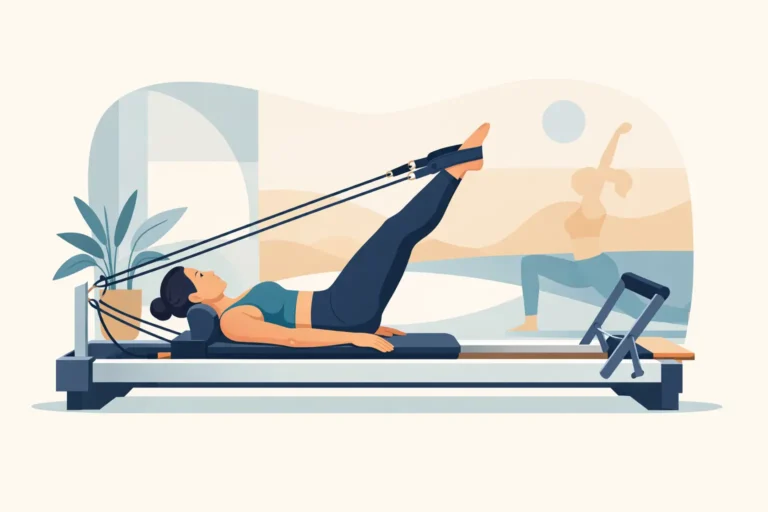
The reformer doesn't forgive rushing, but it quickly demonstrates that precise movement can be intense. If you're wondering, how to exercise on the reformer, start not with the most difficult positions, but with body positioning, breathing control, and conscious selection of resistance. These elements determine whether the workout will support the spine, strengthen muscles, and improve posture.
The Pilates Reformer combines work on a moving platform with springs, bands, and a stable machine structure. This allows you to develop strength, mobility, balance, and core control in a single workout. However, the springs aren't just a "facilitator." Depending on the exercise, they can aid movement or provide significant resistance. Therefore, on the reformer, quality, not speed, is key.
How to Exercise on the Reformer: Start with the Basics
It's worth taking the first classes under the supervision of a trainer, especially if you've had a break from exercise, are experiencing back strain, or are returning to exercise after an injury. Your trainer will show you how to safely get on the reformer, adjust the headrest, straps, and springs, and how to use the platform without sudden changes in position.
At first, don't try to replicate the movements of those working out next to you. Everyone has different hip mobility, shoulder stability, and strength levels. Just because someone can perform a wide range of motion doesn't mean it will be the right fit for you. A good workout should be challenging, but it shouldn't cause severe pain, numbness, or a feeling of instability in your joints.
Before beginning the exercise, consciously position your body. Your head should rest comfortably on the headrest, your shoulders away from your ears, and your ribs should not be pushed upward. Your pelvis should remain stable unless the instructions call for movement. Think about lengthening your spine, not "gluing" your entire back to the platform. The natural curves of your spine are essential.
Breath guides movement
In Pilates, breathing isn't just an addition between sets. It helps activate deep muscles, maintain rhythm, and avoid unnecessarily tensing your neck or shoulders. Exhalation most often accompanies the phase of greater exertion, such as pushing off the platform or pulling in the straps. Inhalation allows the body to prepare for the return.
Don't hold your breath as the exercise becomes more challenging. This is a common reflex that stiffens the body and takes away from the fluidity of the movement. Calm, controlled breathing signals that you're working within a range you can technically maintain.
Choose springs according to your goals, not your ambitions
More resistance doesn't always mean a better workout. For leg exercises, stronger springs can provide needed support and stabilization. For arm, shoulder, or abdominal exercises, too much resistance can easily transfer stress to the neck and lumbar spine. On the other hand, a very light spring can sometimes require more control, as the platform becomes less stable.
That's why the spring setting should be based on the specific exercise and your skill level. Don't accidentally change them during class. Always make sure the platform is secure and the spring is properly attached. A few seconds of attention can make a real difference. affects safety.
In a small class, a trainer can tailor the resistance to your technique, body type, and goals. Someone looking to improve stability after long hours at a desk will need something different than someone building strength and control for running, functional training, or sports.
The movement must be smooth and controlled
The reformer platform moves on rails, so each pull is clearly felt. Instead of dynamically bouncing off the springs, perform the movement in both directions with equal attention. The return phase is not a break. This is when the muscles learn to slow down the movement and the body builds stability.
Imagine having to move the platform without making a sound. This simple tip helps you limit your momentum and see if you're working symmetrically. If one leg is pushing the platform harder, your hips are shifting to the side, or the straps are at different tensions, reduce the range and return to the initial setup.
You don't need to perform hundreds of repetitions. On the reformer, a few very precise movements are often enough to feel the muscles in your glutes, thighs, abs, and back working. The effect builds consistency and gradual increase in difficulty, not a one-time overload.
The most common reformer mistakes
The most common mistake is over-tensing the shoulders. When the hands are working at the waist, many people immediately raise their shoulders towards their ears. Stop, lengthen your neck, and feel your shoulder blades resting firmly against your back. The arms can work powerfully without clenching the entire upper body.
The second mistake is losing control of the ribs and pelvis. It's easy to push the ribs forward during abdominal exercises, and excessive lumbar arch during leg movements. A smaller range of motion will then be a better choice than a position that looks impressive but lacks stability.
It's also worth being careful about moving too quickly to advanced variations. Kneeling positions, planks, standing exercises, and more complex strap work require preparation. First, build confidence in the basics: pushing the platform with your feet, bridge work, strap control, and core stabilization.
How to plan your first weeks of training
For most people, two Pilates Reformer workouts per week are a good start. This frequency allows you to familiarize yourself with the equipment, solidify your technique, and give your muscles time to recover. If you've been exercising or have been exercising sporadically, one workout per week is also worthwhile—provided it becomes a regular part of your routine.
Spend the first few weeks learning. You might feel muscles you didn't notice or didn't notice before: the deep abdominal muscles, glutes, shoulder blades, and inner thighs. Slight tenderness after training is normal, but joint pain or worsening back pain should be reported to your trainer immediately.
After a few sessions, you can combine the reformer with mat Pilates, barre, or functional training. This is a good combination for those who want to simultaneously work on mobility, a lean physique, and the strength needed for everyday life. However, the proportions depend on the goal. If you have high stress and a sedentary job, you might prioritize more leisurely work on movement control. If you're aiming for physique, it's worth gradually adding strength training.
When to be especially careful
The reformer is a piece of equipment that can be modified for various fitness levels, but it does not replace medical diagnosis or physical therapy. If you have recently suffered an injury or surgery, experience severe pain, dizziness, unstable joint problems, or your doctor has recommended limiting exercise, consult a specialist before returning to training.
During pregnancy, postpartum, and pelvic floor conditions, you need a personalized approach to exercise and breathing. This doesn't mean abandoning activity, but rather carefully adjusting positioning, resistance, and intensity. The best plan is one that leaves you feeling more fit and energized, not just having to "get through" the session.
At Velvet Gym, trainers focus on technique, and small classes allow you to spot compensations faster before they become habitual. If you're just starting out, be open about your goals, previous injuries, and concerns. This isn't just information on the sidelines—it's the starting point for a workout tailored to you.
Give yourself a few sessions to get used to the reformer. Over time, movement will become more natural, breathing will become calmer, and your body will begin to work more confidently. The most noticeable results come when you treat training as a regular exercise for your body, not a fitness test.