
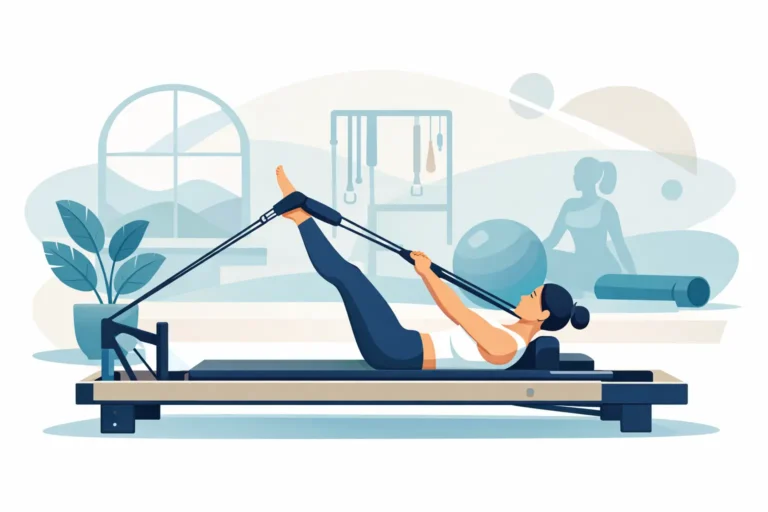
The first encounter with a reformer can be surprising. A bed, a moving carriage, springs, straps – at first glance, the equipment looks more technical than a classic mat. That's why it's worth starting this guide to the Pilates Reformer with the most important information: it's a workout that requires no prior experience, but it's incredibly rewarding from the very first session, if done well.
The reformer isn't a seasonal fad. It's a tool for precise bodywork that helps strengthen core muscles, improve posture, relieve the spine and build a slim, fit physique without accidentally overloading joints. For many people, it's also simply a more enjoyable form of exercise than a crowded gym and chaotic, uncontrolled training.
What exactly is Pilates Reformer?
Pilates Reformer is a form of training performed on a special machine with a moving platform and a system of springs that provide resistance. This allows exercises to be very precisely tailored to the exerciser's level. The same movement can be supportive for a beginner or challenging for an advanced user.
The greatest advantage of the reformer is that it provides controlled resistance while simultaneously guiding the body along a defined path of movement. This helps improve the feeling of muscle activity, improves pelvic, shoulder, and spine alignment, and reduces compensations that often occur during regular strength or fitness exercises.
In practice, this means a workout that can be intense, but not harsh on the body. You feel the work, stabilization, and effort, not the accidental tension in your neck or pain in your lower back.
Who is the Pilates Reformer Guide for?
If you're wondering if this workout is for you, the answer is usually yes, but only if the level and guidance are chosen correctly. Pilates Reformer is suitable for beginners, those returning to exercise after a break, and those with a more training-conscious mindset who want to improve their movement quality.
It's a great choice if you sit a lot, feel a stiff back, have a weak core, want to slim down, or want to strengthen without putting too much strain on your joints. It also works well for people who have previously tried mat exercises but lacked body feel or proper movement control.
There are also situations where greater caution is necessary. With recent injuries, severe pain, post-surgery, or during pregnancy, it's worth consulting with a trainer to choose the right exercise option. The reformer itself offers a wide range of modifications, but not every body needs the same thing at all times.
What do the first classes look like?
The first workout isn't about speed or impressing anyone with your fitness. The goal is to understand the equipment, breathing, and basic body positioning. The instructor will show you how to safely use the reformer, how to position your feet, hands, pelvis, and ribs, and how to work the springs.
Beginners are often surprised that the exercises appear calm, yet the muscles are working very intensely. This is normal. In Pilates Reformer, it's quality, not quantity, that counts. One well-executed movement achieves more than a series performed quickly and without control.
First classes They typically involve working while lying, sitting, kneeling, and on supports. You can expect exercises for the legs, glutes, abs, back, and shoulders. Some movements will resemble classic Pilates, others will be more functional training. This depends on the style of the class and your training goals.
What effects can you expect?
The noticeable effect often appears faster than the change in the mirror. After a few sessions, many people notice they stand straighter, maintain abdominal tension more easily, and feel less tension in the lumbar spine or neck. The body begins to function more efficiently.
Over time, mobility, stability, and strength improve. The silhouette typically becomes visually longer, the waistline more defined, and the buttocks and legs stronger without feeling heavy. This isn't a workout aimed at accidentally "burning calories," but rather at improving the quality of movement, which leads to lasting aesthetic and health benefits.
However, it's important to keep your expectations realistic. If your goal is also to significantly improve your fitness or increase muscle mass, the reformer alone may not be enough. In such cases, combining Pilates Reformer with other forms of exercise, such as functional training, mat work, or gentle aerobic activity, works best.
What a reformer provides and what it cannot replace
It's a great tool for building control, stability, and core strength. It helps teach the body proper movement patterns and is a great support for those who want to move better, not just more. This is a huge advantage, especially if you previously associated training with back pain or post-exercise tension.
But a reformer isn't a magic solution. It won't replace a well-designed plan for specific fitness goals, it won't eliminate the effects of sitting all day without any habit changes, and it won't deliver results after just two random sessions. Regularity matters, as do technique, progression, and adapting the classes to your level.
Pilates Reformer and Mat – What to Choose?
This question comes up frequently, and the honest answer is: it depends. A mat teaches you to work with your own body weight and can be more demanding without the added support of equipment. A reformer, on the other hand, provides resistance, guided movement, and greater ability to precisely adjust the difficulty.
For beginners, the reformer can be even easier to learn than the mat, as it allows for a better sense of body alignment. On the other hand, some reformer exercises are more technical and require focus. Combining both forms often yields the best results, as the body learns to stabilize itself in different conditions.
What to pay attention to when choosing classes
Not every Pilates Reformer workout is the same. They vary in intensity, group size, level of technical correction, and goal. Some classes will be more relaxed and therapeutic, while others will be dynamic and focused on body shaping.
It's worth checking whether the group is small and whether the trainer has the space to truly observe the movement. This is especially important at the beginning. With the reformer, small adjustments make a big difference. If no one is correcting the shoulders, pelvis, or breathing, it's easy to lose what's most valuable about this method.
It's also worth considering whether the class program addresses a variety of needs. Some people prioritize a healthy spine, others a slimmer physique, and still others a safe return to fitness. Clubs that prioritize quality exercise and small groups make it easier to find a real fit. That's why many people from Józefów, Otwock, and Falenica are looking for a more intimate alternative to large gyms.
How to prepare for your first training session
You don't need any special training or athletic background. All you need is comfortable clothing, non-slip socks, and a willingness to focus on yourself. It's best not to arrive after a heavy meal or set your sights on breaking records. This is a workout where precision trumps rushing.
If you have a history of back pain, injuries, or other limitations, please mention this before your class. This isn't a minor detail, but rather important information that allows your trainer to select safer options. Good guidance means not only motivation but also a smart exercise selection.
When will you see the difference
With a regular workout routine of 2-3 times a week, the first noticeable changes often appear after 3-4 weeks. Improved posture, greater abdominal control, a lighter back, and greater freedom of movement are the most common signs that the body is beginning to function differently. The physique benefits come later, but are usually more lasting because they result not from momentary overexertion but from better movement organization.
If you want faster results, it's not about adding random workouts. It's better to focus on consistency and quality. At Velvet Gym, this approach produces the best results – training is effective, safe, and tailored to the individual, not the other way around.
Pilates Reformer doesn't promise miracles after a single session. It delivers something more valuable: a body that functions more efficiently week after week, looks better, and rebels less in everyday life. And this is usually the moment when training ceases to be a chore and truly begins to work for you.